Storm season in South East Queensland runs from about October to March. Every year we get the same call the morning after a big storm: "The power's been out since last night, the sun is shining, so why isn't my solar working?"
It is a fair question. Most people assume panels on the roof mean power in a blackout. For most homes, they do not. This article explains why, what a battery changes, and what it does not.
In this article you will learn:
- Why solar panels switch off when the grid goes down
- What a battery can and cannot do in a blackout
- Whole-home backup versus essential circuits
- How long a battery will actually last in an outage
- Why you should never plug a generator into the house yourself
- Questions to ask before you buy a battery for backup
Why your solar switches off in a blackout
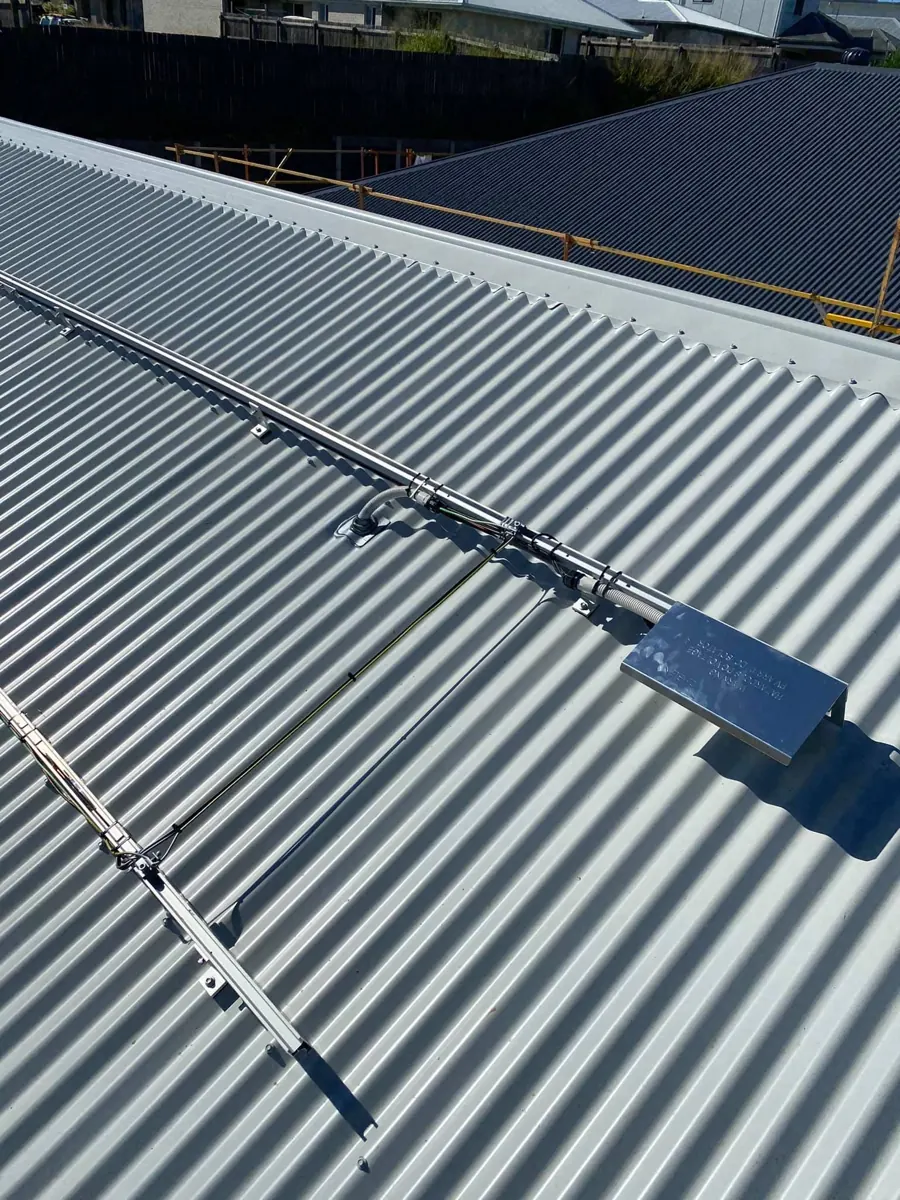
A standard grid-connected solar system has no way to keep running on its own. When the grid goes down, the inverter detects it and shuts off within a fraction of a second. This is required by the Australian standard for grid-connected inverters, and it is there for a good reason.
When a line is down after a storm, the network's line crews treat it as dead while they repair it. If thousands of rooftop systems kept pushing power back into the street, a line they thought was safe could be live. The shutdown protects the people fixing your power.
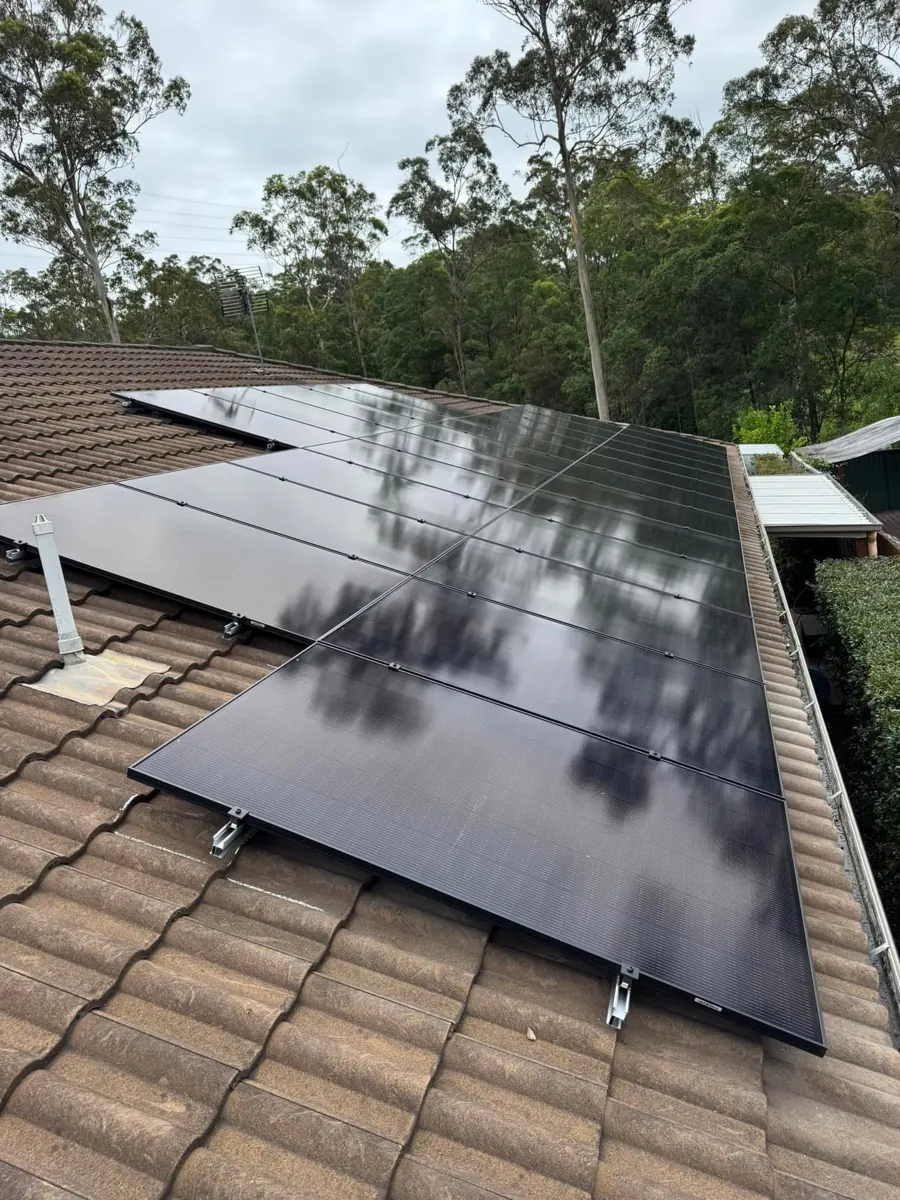
So a solar-only system, however large, gives you nothing during a blackout. Not even in full sun. The panels are still producing, but the inverter will not use it until the grid comes back.
What a battery changes
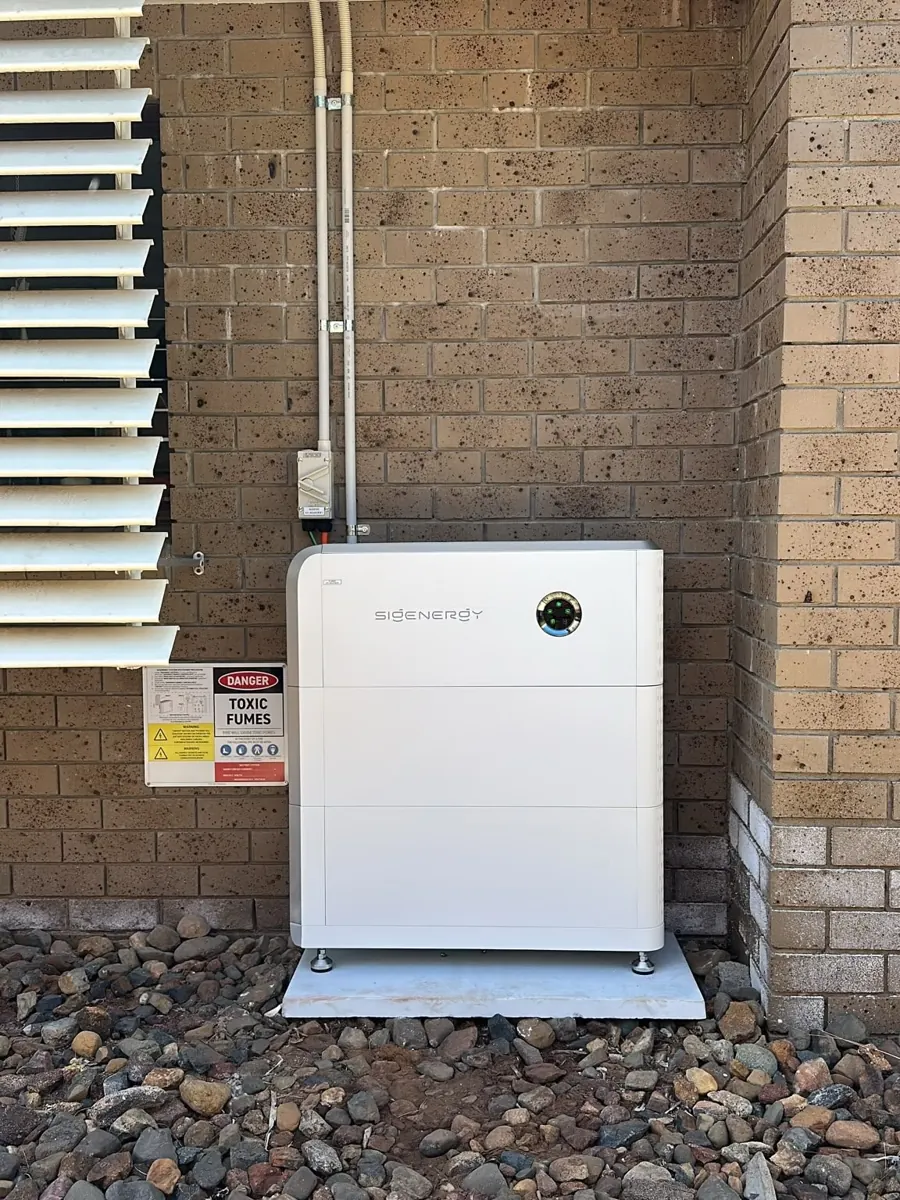
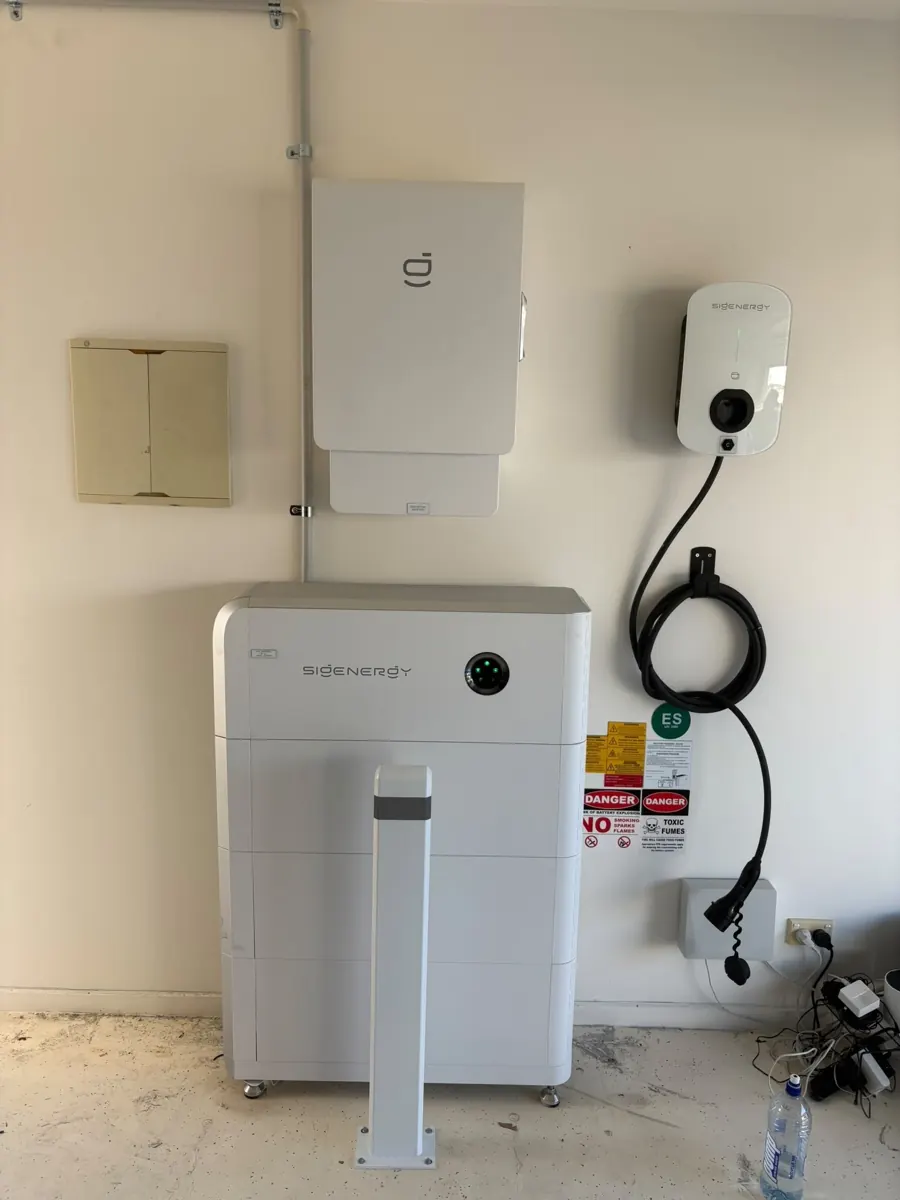
A battery with backup capability can disconnect your home from the grid and run it as its own small island. Your house keeps power, the street stays dead, and the line crews stay safe.
Here is the part many people miss: not every battery is set up for backup. Some batteries cannot provide backup at all. Others can, but only if extra equipment is installed and the switchboard is wired for it. If backup matters to you, it has to be part of the design from day one. It is not something that just happens because there is a battery on the wall.
When a battery is set up for backup, there are a few more things worth knowing:
- The changeover. Some systems switch over so quickly you will not notice. Others have a short gap, so clocks may reset and computers without their own backup may restart.
- Recharging from solar. Many systems can keep charging the battery from your panels during a long outage. Some cannot. That difference matters a lot in a multi-day blackout.
- Power limits. A battery has a limit on how much power it can deliver at once, not just how much energy it stores. Run the oven, the kettle and two air conditioners together and you may hit that limit.
Whole-home backup or essential circuits
There are two common ways to set up backup.
Whole-home backup keeps everything on the backed-up side of the switchboard running. It is simple to live with, but it means a big load like a ducted air conditioner can drain the battery quickly.
Essential circuits backup keeps only the circuits you choose running. Typically that is the fridge and freezer, some lights, the internet modem, a few power points and, for some households, medical equipment or a pool pump. Everything else goes off. The battery lasts far longer because it is only carrying the things that matter.
Neither is right for everyone. A family with a home-based medical need will design it differently to a retired couple who just want the fridge to survive a storm. This is one of the questions we work through in the first consultation.
How long will a battery last in a blackout?
It depends on two things: how much energy is left in the battery when the power goes out, and what you are running.
A typical home battery we install is in the 16 to 20 kWh range. As a rough guide, a fridge, a freezer, some LED lights, a modem and phone charging might use a few kWh across a whole day. On those loads alone, a well-charged battery can often carry a home through the night and into the next day, then refill from the panels if the system allows it.
Add air conditioning, an electric oven, a clothes dryer or an EV charger and that changes quickly. Those loads can use as much in an hour as the essentials use in a day.
There is also a timing question. If the storm hits at 9 pm after the battery has spent the evening powering your home, there may not be much left. Some systems let you hold a reserve in the battery for backup, or charge it up ahead of a forecast storm. It is worth asking how yours works.
A word on generators
Some people keep a petrol generator for storm season. That is fine for running a fridge on an extension lead. What is never fine is connecting a generator to your house wiring through a power point or the switchboard without a proper changeover switch installed by a licensed electrician.
Without that switch, a generator can feed power back into the street, which is exactly the danger the inverter shutdown is there to prevent. It can also damage your appliances and your solar equipment. If you want a generator connection, have it done properly.
When backup is not worth paying for
Backup is a real benefit, but it is not the main reason most people buy a battery. The main reason is using your own solar in the evening instead of buying power from the grid.
If your area rarely loses power, and nobody at home depends on electricity for their health, a simple battery without a full backup setup may suit you fine. If you are in a part of the coast or hinterland where storms take the power out every summer, or someone at home needs it, backup is worth designing in properly. Honest advice depends on your home, not on what is easiest to sell.
Questions to ask before you buy a battery for backup
- Will this battery provide backup in a blackout, and is the extra equipment for that included in the quote?
- Is it whole-home or essential circuits? Which circuits exactly?
- How long is the changeover gap?
- Can the battery recharge from solar while the grid is down?
- What is the maximum power it can supply during backup?
- Can I set a backup reserve, or charge it before a storm?
If a quote does not answer these, ask. A good installer will be happy to explain.
Bottom line
Solar on its own switches off in a blackout. That is by design and it keeps line workers safe. A battery can keep your home running, but only if it is chosen and wired for backup, and only for as long as its stored energy and power limits allow. Get the design right before the install and storm season becomes a lot less stressful.
If you would like to talk through what backup would look like in your home, start with a free, no-obligation chat. Book a free consultation or call 0468 097 875.
FAQ: solar and blackouts
Will my solar panels work during a power outage?
Not on their own. A grid-connected solar inverter must shut down when the grid fails, so the panels produce nothing you can use until power returns.
Does every home battery give backup power?
No. Some batteries cannot provide backup, and others need extra equipment and switchboard work to do it. Check the quote says backup is included.
Can I run my air conditioner on a battery during a blackout?
Sometimes, depending on the battery's power limit and how much energy is stored. Air conditioning drains a battery quickly, so many households leave it off the backed-up circuits.
Is it safe to plug a generator into a power point?
No. Back-feeding a generator through a power point is dangerous to you and to line workers. A licensed electrician needs to install a proper changeover switch.
Is the battery rebate available for backup batteries?
The federal battery rebate is based on the battery's eligible capacity, not on whether it is set up for backup. Eligibility is set by the government. We check it and handle the paperwork as part of the quote.