We install batteries for a living. We have put in more than 500 of them across South East Queensland and Northern NSW. So you would expect us to tell you a battery is a great idea for everyone.
It is not. For many homes a battery is a sound decision. For some it is not worth it yet. This is the honest list we give people at the kitchen table, both sides.
In this article you will learn:
- The real advantages of a home battery
- The real drawbacks, including the ones salespeople skip
- Which households tend to get the most from a battery
- Which households should probably wait
The pros
1. You use your own solar at night
This is the main reason to buy a battery. Without one, the solar you do not use during the day goes to the grid for a small feed-in credit. Then in the evening, when the family is home, cooking and running the air conditioning, you buy power back at a much higher price. A battery stores the daytime surplus and uses it in the evening instead.
2. Less exposure to tariff changes
Feed-in tariffs have fallen a long way, and time-of-use pricing makes evening power the most expensive power of the day. The more of your own energy you use, the less any of those changes affect you.
3. Backup in a blackout, if it is set up for it
A battery designed for backup can keep the fridge, lights and internet running when the grid goes down. That matters in storm season. It only works if backup is part of the design. Our article on what happens to your solar in a blackout explains how it works.
4. The rebate lowers the upfront cost
The federal battery rebate reduces the price of an eligible battery, and it is applied on the quote. It steps down every six months, which is worth knowing, but it is not a reason to rush a decision. Eligibility is set by the government. We check it and handle the paperwork.
5. It makes better use of export limits
Some network connections limit how much solar you can send to the grid. A battery soaks up power that would otherwise be wasted.
The cons
1. It is a significant upfront cost
Even after the rebate, a battery is a big purchase. How long it takes to pay its way depends on your usage, your tariff and how the system is set up. Anyone who promises you a fixed payback without looking at your bills is guessing.
2. It does not suit every usage pattern
If you use most of your solar during the day already, there is less left over to store. A battery earns its keep by moving daytime solar into the evening. No surplus, less benefit.
3. Backup is not automatic
Many people buy a battery assuming it will keep the lights on in a blackout. Some batteries cannot. Others need extra equipment that is not always in the quote. Check before you sign.
4. It needs the right spot
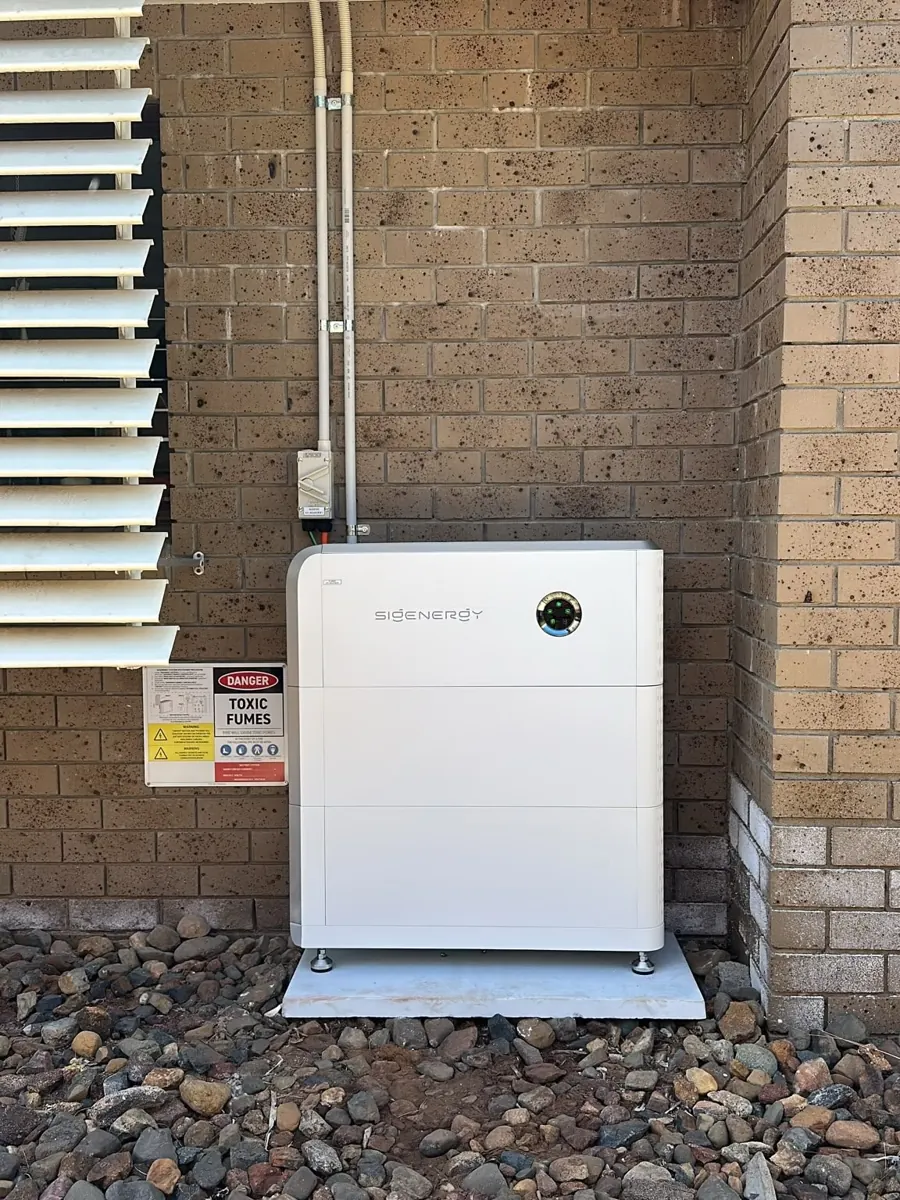
Batteries have clear rules about where they can go. Not in a bedroom or living area, not under stairs, not in a ceiling space, and not blocking an exit. They also need protection from direct sun and, in a garage, from cars. Some homes do not have an easy spot, and that adds cost or rules it out.
5. Your switchboard may need work
Older switchboards often need upgrading to take a battery safely. That is extra cost on some jobs. See our article on switchboard upgrades.
6. Batteries age
Like a phone battery, a home battery holds a little less over time. Manufacturer warranties cover a minimum level of capacity for a set number of years, with conditions. Read them.
7. A poor install is a real risk
The rebate has brought a rush of new sellers into the market. A battery is stored energy. It needs to be installed properly, labelled properly and placed safely. Our battery safety page lists the eight things we check on every job.
Who tends to get the most from a battery
- Households who are out during the day and home in the evening
- Families with high evening use: cooking, air conditioning, pool pumps, EV charging
- Homes already exporting a lot of solar for a small feed-in credit
- People in areas that lose power in storms, or with someone at home who depends on power
- Homes on time-of-use tariffs with expensive evening rates
Who should probably wait
- People who are home all day and already use most of their solar
- Very low-usage households with small evening bills
- People planning to sell in the next year or two
- Homes with no safe battery location without major work
If you are in the second group, solar on its own may be the right call for now. We will tell you so.
Bottom line
A battery is a good decision for many homes, typically those with a solar surplus during the day and high use at night. It is not right for everyone, and backup, placement and switchboard work all need to be sorted out before the price means anything. The only way to know for your home is to look at how you actually use power.
If you would like an honest view on whether a battery suits your home, start with a free, no-obligation chat. Book a free consultation or call 0468 097 875.
FAQ: home batteries
Is a home battery worth it in Queensland?
Often, for households with evening use and a daytime solar surplus. Less so for people home all day who already use most of their solar.
What size battery does a typical home need?
Most batteries we install are in the 16 to 20 kWh range, but the right size comes from your actual usage, not a rule of thumb.
Can I add a battery to my existing solar?
Usually, yes. It depends on your current inverter, switchboard and where the battery can go. We check this at the site assessment.
Will a battery work in a blackout?
Only if it is designed and wired for backup. Ask the installer to confirm this in writing.